The Power of Walking: The Most Underrated Exercise at Any Age
No gym membership required — just your two feet and a decent pair of shoes.
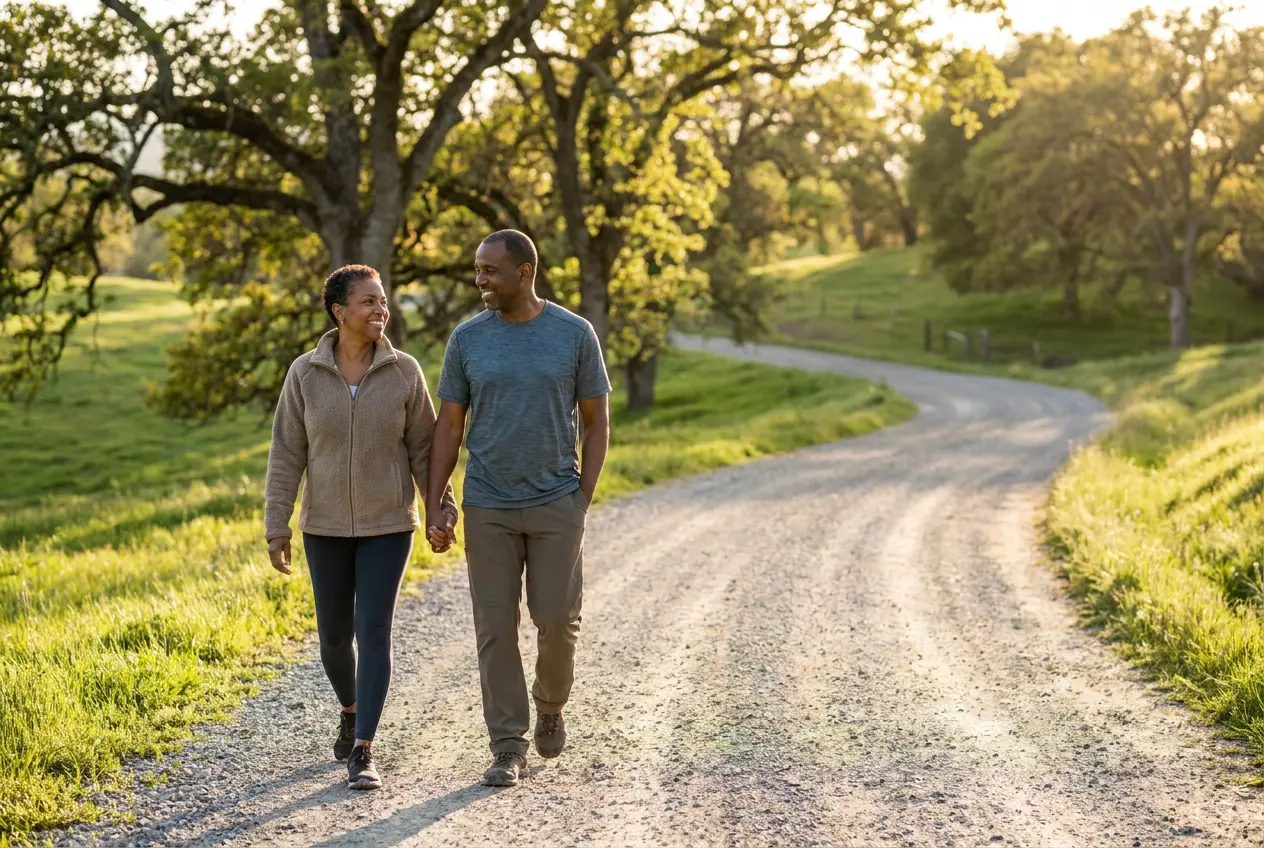
We spend billions on gym memberships, home equipment, and fitness apps, but the most effective exercise for people over 50 might be the one you've been doing since you were a toddler. Walking is simple, free, and wildly underestimated.
The Exercise Hiding in Plain Sight
I used to think walking didn't count. Seriously. If I wasn't sweating through a shirt or gasping for air, I figured I wasn't really exercising. A walk around the neighborhood? That was just... getting from point A to point B. Not a workout.
Then I moved to a five-acre homestead, and walking became my entire life. Walking to the barn. Walking the fence line. Walking to check on the garden, the chickens, the compost pile. Some days I clock four or five miles without ever leaving my property. And you know what? I feel better than I have in a decade. My doctor noticed too — better blood pressure, better cholesterol, better mood. All from putting one foot in front of the other.
Walking is the most underrated exercise on the planet, especially for those of us over 50. And the science agrees with me on this one.
What the Research Actually Says
This isn't just me rambling. There's a mountain of research backing up what walkers have known for centuries.
Heart Health
The American Heart Association considers brisk walking a moderate-intensity aerobic activity. Studies show that regular walking reduces the risk of heart disease by up to 30 percent. It lowers blood pressure, improves circulation, and strengthens your heart without the strain that high-impact exercise can put on aging joints. Thirty minutes a day, five days a week. That's the baseline, and most of us can manage that.
Joint Protection
Here's something that surprises people — walking is actually good for your joints, not bad for them. It increases blood flow to cartilage and strengthens the muscles around your knees and hips, which provides better support. Unlike running, there's no pounding involved. If your orthopedist ever told you to "keep moving but take it easy," walking is exactly what they meant.
Mood and Mental Health
Walking triggers the release of endorphins — those natural feel-good chemicals your brain produces. But beyond the chemistry, there's something about being outside, moving at a human pace, and noticing the world around you that just resets your mental state. I've solved more problems on a morning walk than I ever have sitting at a desk. Something about the rhythm of footsteps loosens up the brain.
Brain Health
Multiple studies have linked regular walking to a reduced risk of cognitive decline and dementia. Walking increases blood flow to the brain, promotes the growth of new brain cells, and improves memory and executive function. If there were a pill that did all that, it would be the best-selling drug in the world. But it's free, and it's waiting right outside your door.
Making Walking a Habit That Sticks
Knowing walking is good for you and actually doing it consistently are two different things. Here's what's worked for me and for folks I've talked to who've made walking part of their daily routine.
Anchor It to Something You Already Do
I walk every morning right after my first cup of coffee. That's my anchor. The coffee is non-negotiable, so the walk that follows has become non-negotiable too. Maybe yours is after breakfast, during your lunch break, or right after the evening news. Attach it to a habit that already exists and it becomes automatic.
Start Embarrassingly Small
If you're not currently walking regularly, don't start with a five-mile hike. Start with ten minutes around the block. Then fifteen. Then twenty. Build slowly and let the momentum carry you. The goal isn't to impress anyone. The goal is to still be walking next month.
Invest in Good Shoes
This is the one thing I'll tell you to spend money on. A good pair of walking shoes with proper arch support and cushioning makes the difference between enjoying your walk and dreading it. Go to a real shoe store, get fitted, and don't cheap out. Your feet carry you through everything — treat them well.
Find a Walking Buddy or Group
Walking with someone else makes the time fly and adds accountability. My wife and I walk together most mornings, and it's become some of our best conversation time. No phones, no TV, no distractions — just us and the gravel road. If you don't have a partner, look for walking groups at your local park district or community center. They're more common than you'd think.
Track Your Steps — But Don't Obsess
A simple pedometer or your phone's built-in step counter can be a great motivator. I like seeing my daily numbers, and it gives me a little nudge on days when I'm tempted to skip. But don't let the numbers stress you out. The widely quoted ten thousand steps per day is a marketing number, not a medical prescription. Research shows significant health benefits starting at just seven thousand steps. Anything is better than nothing.
Walking on the Homestead
Since we moved out to the farm, walking has taken on a whole new meaning for me. It's not just exercise — it's how I check on things, plan projects, and stay connected to the land. My morning walk takes me past the garden beds, along the tree line, down to the pond, and back up to the barn. It changes with the seasons. Some mornings I'm watching the fog lift off the pasture. Other mornings I'm dodging mud puddles and arguing with a rooster who thinks the path belongs to him.
It's the best part of my day. And it costs me nothing but thirty minutes and a pair of broken-in boots.
If you take one thing from this article, let it be this: don't underestimate the walk. It's simple, it's sustainable, and it works. Lace up and get out there. Your body and your brain will thank you for it.