Yoga After 50: You Don't Have to Be Flexible to Start
Spoiler alert — yoga is about showing up, not showing off.
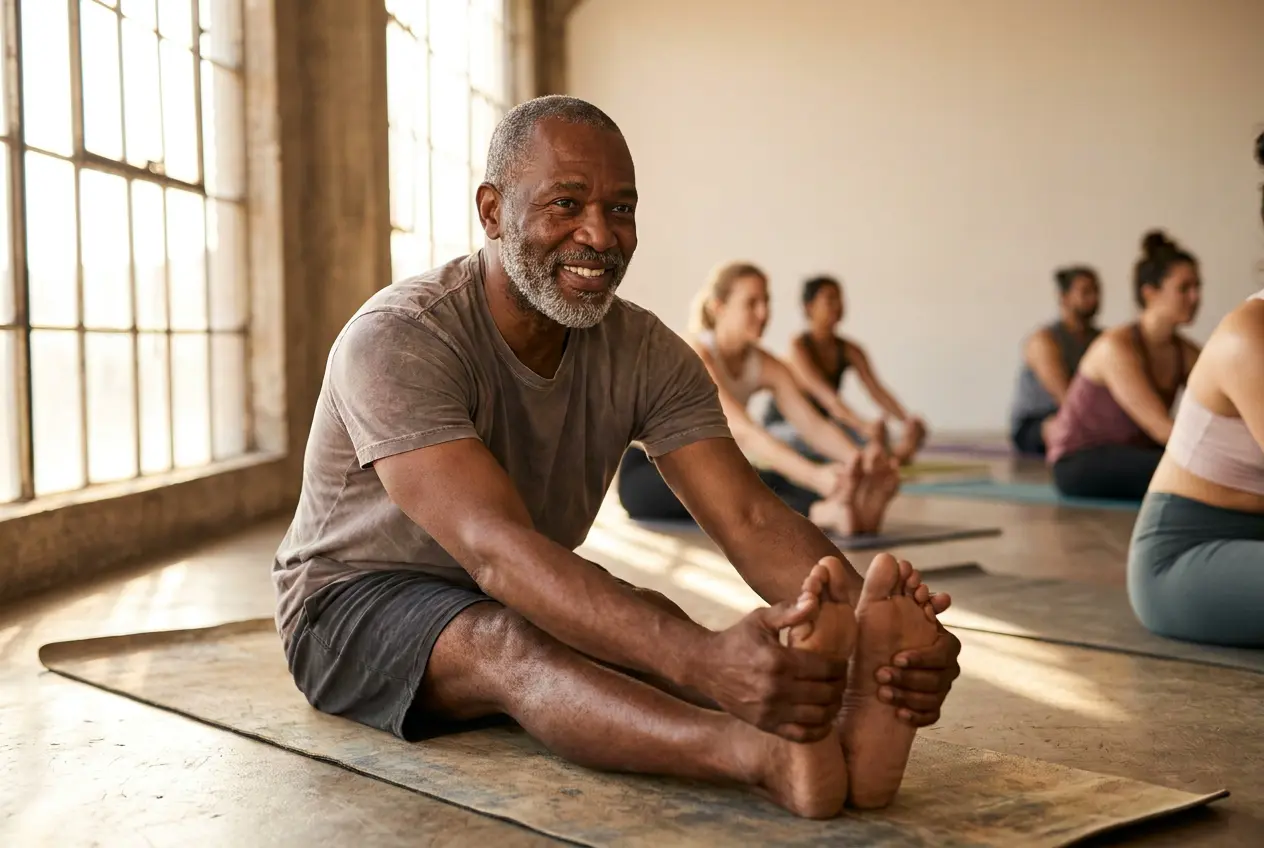
If you think yoga is only for people who can already wrap their legs behind their head, I've got great news. I started yoga after 50, and I can barely touch my shins, let alone my toes. Turns out, that's completely fine.
The Biggest Myth That Keeps Boomers Off the Mat
Let's get this out of the way right up front: you do not need to be flexible to start yoga. I repeat — you do not need to be flexible. Saying you're too stiff for yoga is like saying you're too dirty to take a shower. Flexibility isn't a prerequisite. It's a result.
I know this because I walked into my first yoga class with the flexibility of a two-by-four. I couldn't touch my toes. I couldn't sit cross-legged without my knees hovering somewhere near my ears. And when the instructor said "fold forward and let your hands rest on the floor," I thought she was joking. My hands rested on my kneecaps, and that was being generous.
But here's what happened — nobody cared. Not the instructor, not the person next to me, not anyone. And about six weeks in, I noticed I could reach a little further. My back didn't bark at me every morning. I could actually get out of bed without sounding like a bowl of Rice Krispies. That's when I became a believer.
Types of Yoga That Are Perfect for Beginners Over 50
Not all yoga is created equal, and some styles are way more beginner-friendly than others. Here are the three I'd point you toward.
Chair Yoga
If you've read my piece on chair tai chi, you already know I'm a fan of the chair. Chair yoga uses a sturdy chair for support, and it's fantastic for people with balance concerns, mobility issues, or anyone who just isn't ready to get down on the floor yet. No shame in that game. The stretches and poses are modified but still effective, and you'll feel the benefits fast.
Gentle and Restorative Yoga
Gentle yoga moves at a slower pace with easier poses. Restorative yoga takes it even further — you basically hold supported poses for several minutes using bolsters, blankets, and blocks. It sounds like napping with extra steps, and honestly, it kind of is. But the deep relaxation and stress relief are no joke. I did a restorative class once and nearly fell asleep in a pose called "supported fish." I'm not proud of it, but I'm not sorry either.
Hatha Yoga
Hatha is the classic, foundational style. Classes tend to be slower-paced and focus on basic poses with an emphasis on breathing and alignment. It's the gateway yoga, if you will. Most community classes labeled "beginner yoga" are some form of hatha, and it's a great place to start building your confidence.
What Yoga Actually Does for Your Body After 50
Forget the Instagram images of people twisted into pretzels on a beach at sunset. Here's what yoga realistically does for those of us in the over-50 crowd.
Better Balance
Yoga includes a lot of standing poses and weight shifts that train your stabilizer muscles. Balance is one of those things you don't think about until it starts to go, and yoga is one of the best tools for keeping it sharp. Out on the homestead, I'm walking on uneven ground all day — hauling feed, stepping over garden rows, navigating the barn. Better balance isn't optional for me anymore. It's survival.
Functional Strength
You won't bulk up from yoga, but you'll build the kind of strength that matters — the strength to carry groceries, get up from a low chair, or lift a bag of mulch without wincing. Holding poses engages muscles you don't typically target, and over time, everyday tasks just feel easier.
Mental Calm
Every yoga class ends with a few minutes of stillness and deep breathing. At first, I thought this part was filler. Now it's my favorite part. The mental clarity I get from those few quiet minutes carries into the rest of my day. I'm more patient, more focused, and less likely to snap when the goats get into something they shouldn't.
My Honest Take — Funny Moments and All
I won't sugarcoat it. My first few yoga classes were humbling. There was the time I lost my balance in tree pose and bumped into the person next to me like a slow-motion domino. There was the class where the instructor asked us to "find our center" and I whispered to myself, "I can't even find my hamstrings." And there was the memorable session where I got stuck in a seated twist and had to kind of roll myself out of it like a turtle on its back.
But here's the thing — every single one of those moments made me laugh, and every single class made me feel better than when I walked in. That's the deal with yoga. You show up imperfect, you do what you can, and you leave a little bit looser, stronger, and calmer than before. That's a pretty good return on thirty minutes.
Getting Started — Practical Advice
Get yourself a basic yoga mat. Nothing fancy — fifteen bucks at any department store will do. Wear comfortable clothes that let you move. If you're starting at home, YouTube has thousands of free beginner classes. I like the ones that say "gentle" or "over 50" in the title because the pacing is right.
If you prefer a class setting, check your local community center, YMCA, or recreation department. Many offer beginner sessions specifically designed for older adults, and the instructors are used to working with bodies that have some mileage on them.
Most importantly, drop the ego at the door. You're not competing with anyone. You're not trying to look good. You're just moving your body, breathing deeply, and giving yourself the gift of thirty to sixty minutes where the only thing that matters is how you feel right now. Trust me — it's worth every awkward moment.